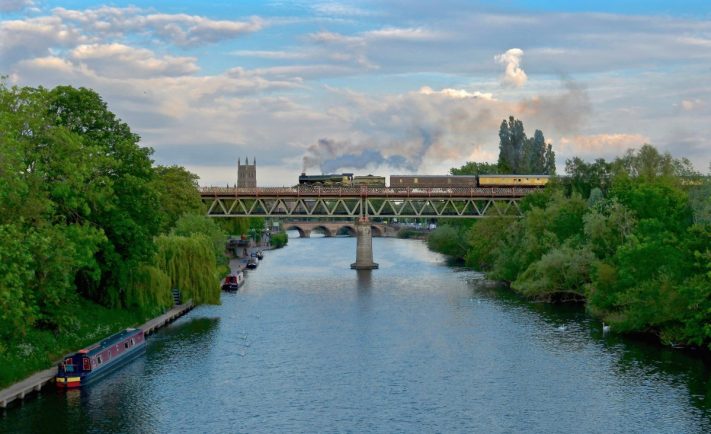
BUILDINGS in Worcester could benefit from an underground heat network powered by the River Severn – subject to the outcome of a proposed study.
A heat network or district heating scheme supplies heat in the form of hot water from a central source to numerous consumers, either business or domestic, via a network of underground pipes.
Heat networks can supply just a few buildings, or can be much larger, covering a much wider area, even an entire city.
An initial feasibility study led by the University of Worcester has demonstrated a scheme connecting the university campuses with a number of key buildings in the city centre was possible. This scheme centred on the use of renewable thermal energy from the River Severn via water source heat pumps. The proposed detailed project development stage will give Worcester City Council,
University of Worcester, and Worcestershire County Council a potential route forward to the development of a district heating scheme which would heat major buildings in and around the river in the city centre.
There are already more than 14,000 heat networks in operation across the UK, supplying heat and hot water to approximately 480,000 customers.
Members of the city council’s Environment Committee are to be asked to back the acceptance of a £230,000 Government grant for the project development study and to allocate £5,000 match funding.
Project partners have also committed to providing match funding, with the Worcestershire Local Enterprise Partnership (LEP) providing £40,000; the University of Worcester £10,000 and the county council £5,000.
Luke Willetts, deputy CEO of the Worcestershire LEP and Worcestershire Growth Hub, said: “Producing sustainable energy and heating is one of the major pillars of Worcestershire’s Energy Strategy, launched by the Worcestershire LEP and partners.
“This study into a potential heat network outlines the opportunity we have to utilise technology and innovative thinking to help heat Worcester in a more sustainable way and help us achieve our carbon targets.
“The Worcestershire LEP supports the outcome of this study and looks forward to working with partners to facilitate this exciting project for the county.”
Professor David Green, the university’s vice chancellor and chief executive, said: “Global heating is a reality.
“Left unchecked the results will be disastrous. We must all work together to minimise emissions of carbon dioxide, methane and other greenhouse gases whilst improving air quality. This is so important for human health today as well as for the future.
“The energy flowing down the River Severn has much potential for productive human use in an environmentally sustainable way.”
Coun Richard Morris, county council cabinet member for the Environment, said: “A heat network could be a way of providing better energy efficiency and low or zero carbon heat to properties.
“Ideas such as helping this feasibility study showcases our commitment to reach the goals we set when we helped to develop Worcestershire’s Energy Strategy.”