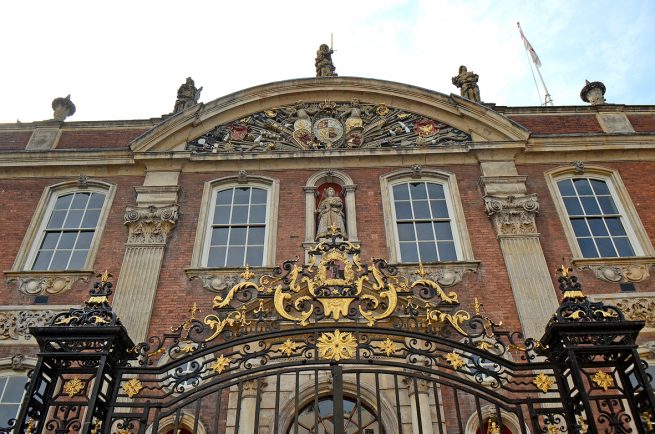
COUNCILLORS in Worcester are set to make a major decision about how councils across Worcestershire will be reorganised from 2028.
The government wants the current arrangement – with some services delivered by Worcestershire County Council and others by local district and borough councils – replaced with unitary councils that provide all services.
Specialist consultants have been weighing up the pros and cons of having one unitary authority for the whole county or two – one serving the north of Worcestershire and another for the south – and Worcester City Council is set to meet on Tuesday (September 2) to agree which option should be backed for the final submission in November.
City council deputy leader Coun Jabba Riaz said: “This is one of the most important decisions that city councillors will be called on to make. The shape of local councils in our city and county is set to change forever in April 2028, shaping how essential services from bin collections to social care will be provided for decades to come.
“I look forward to a lively and engaged debate over the two options for Local Government Reorganisation in Worcestershire when the City Council meets on Tuesday September 2.”
Worcester City Council, along with the councils for Bromsgrove, Malvern Hills, Redditch and Wychavon, engaged specialists Mutual Ventures to carry out a full objective and evidence-based appraisal of the different options. This included a major public consultation, titled Shape Worcestershire, that took place in June.
Mutual Ventures looked at two options – a single unitary authority for the whole of Worcestershire, providing all services and a south Worcestershire authority covering Worcester and the districts of Wychavon and Malvern, alongside a separate north Worcestershire council, which would serve Bromsgrove, Redditch and Wyre Forest.
Their report says that a single Worcestershire unitary council would produce more savings. However, there is evidence to show that larger councils can produce disadvantages in providing adult social care and children’s services. In the public consultation, 28.7 per cent of respondents favoured a single unitary council for the whole county.
The option of separate north and south councils was found to be better for local community engagement and neighbourhood empowerment. In this scenario, the two councils would have a strong understanding of their local economies, enabling them to produce tailored local strategies. In the public consultation, 47.8 per cent of respondents favoured having separate councils for the north and south of Worcestershire.
Worcester City Council will decide which of the two options to support. The preferred option will then be developed further into a detailed final proposal.
That will come to the council for approval on November 25, and will then be submitted to the government in time to meet the deadline of November 28.