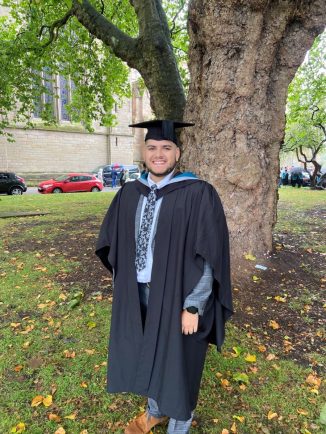
CALLS are being made at Worcester University for more men to work with youngsters in early years settings.
Currently, it’s estimated men only make up around two to three per cent of the workforce when it comes to caring for children from birth to five years-old in schools, childminding settings and in social work.
But graduates at Worcester University want to change this.
Bradley Layton, who is doing a postgraduate teaching apprenticeship, said: “Growing up without a father meant that I saw male teachers as a father figure and role model.
“I would love to see both males and females in this profession, as I think they both play a vital role to children’s development. When I worked in a day nursery, I worked with a child who had an adopted mother. He looked up to me as a father figure and we found that his challenging behaviour became less frequent after he formed an attachment to me.”
He added: “As the number of male teachers increases when children go to secondary school, it’s important that children are able to build bonds and relationships with males at an early age.”
Christpher Griffiths. who has just graduated with an early years foundation degree, worked four days a week in primary schools and as a swimming teacher, during his studies.
He continued:“I have come to realise that as a society, we need to be more accepting of men who love working with children. The only way this can change is by seeing more men in early years.
“I think it’s really important for children to have lots of different role models across all protected characteristics. Failing to show different types of people in early years fails to prepare children for a world where they’re supposed to have equal opportunities and in particular a lack of men in early years reinforces gender stereotypes.”
Thomas Weaver, head of department for children and families at Worcester University and an experienced professional in early years, added: “One of the main barriers is the societal perception that men cannot work in the early years. When I first started, I was often the only male in the team, and I had no male role models I could work with.
“I quickly came to realise that the most important thing for supporting young children is not gender or identity, but disposition, knowledge and skills.”