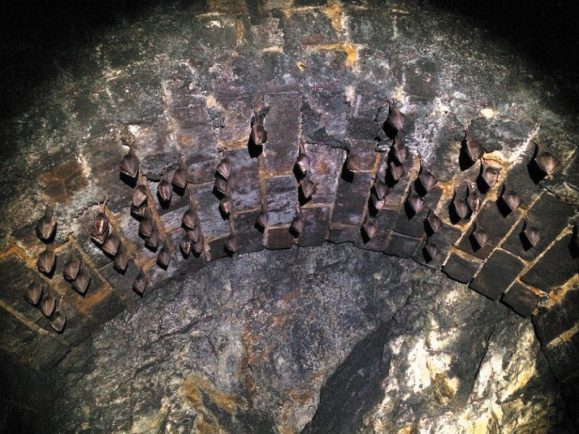
A COLONY of a rare species of bat has been discovered roosting in the city’s historic cathedral.
Though extinct in northern England due to changes humans have made to the natural environment, the vulnerable Lesser Horseshoe bats have taken up a new home under Worcester Cathedral.
Now street lighting along part of the riverfront is to be dimmed at certain times to avoid disturbing the bats.
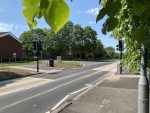
The mammals are particularly sensitive to high power lighting, having evolved to hunt in the darkness using sound, so when the regeneration of the riverside along Severn Way included new bollard lighting, the colony would have been obstructed from returning to their roost or dispersing into the countryside.
Following expert advice, Worcestershire County Council officers are now undertaking a lighting experiment which will significantly help the bats enter and exit their legally protected roost.
A short section of the bollard lighting, just outside the bat roost near the cathedral, will be turned off at sunset and before sunrise – only during summer months while the bats are awake – to allow them safe passage.
To ensure the safety of the public, railings to match those used further up and down the riverside will be installed to prevent any falls and novel low-power solar lighting will be used to help mark a path for pedestrians.
A new information board will also be built to provide details about the bats.
Ecologist Cody Levine said: “These bats are uniquely beautiful and provide a vital function in supporting our agricultural economy, by removing vast numbers of crop pests.
“This is the only urban colony of the species I’m aware of, so to find them in the heart of Worcester is testament to the fantastic and high quality natural environment we have here. The county council has a legal obligation and a moral duty to help conserve this colony for future generations.”
Coun Anthony Blagg, the county council’s deputy leader and cabinet member with responsibility for environment, said: “We’re proud of Worcester’s natural environment and keen to ensure the vital urban regeneration of the city’s waterfront is compatible with maintaining our natural assets too.
“In this case, the county council recognises it has a legal and moral duty to appropriately consider protected species alongside its obligation to maintain a safe, well-lit and attractive public environment.
“We understand these bats have likely used this roost for generations and we’re pleased this pragmatic solution will help ensure they will be here for generations to come.”