MPs have given their approval to the Hillsborough Law, legislation designed to stop public bodies and officials covering up failures by the state.
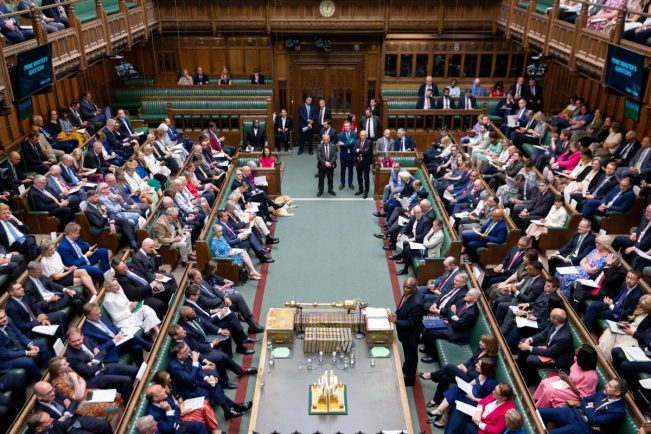
Prime Minister Sir Keir Starmer told the House of Commons that Britain “stands on the precipice of change” as the bill, officially titled the Public Office (Accountability) Bill, cleared its final Commons stages on Tuesday. The law places a duty on public authorities and officials to be truthful and to cooperate fully with official inquiries and investigations.
The legislation takes its name from the 1989 Hillsborough disaster, in which 97 people died following a crush at the FA Cup semi-final between Liverpool and Nottingham Forest. A later inquiry found that police leaders had misrepresented what happened, wrongly blaming Liverpool supporters while suppressing evidence of their own shortcomings.
Andy Burnham, who is expected to succeed Sir Keir as prime minister, welcomed the bill as delivering “justice for ordinary people going forward” and called it “some legacy” for the outgoing prime minister.
The bill still needs to pass through the House of Lords before it can be signed into law, having been held up for months by disagreements over how the new duty of candour would apply to the security services.
Addressing MPs, Sir Keir said the Hillsborough families had campaigned “so that no family like them should ever have to endure and suffer what they went through.” He added: “What they have done will protect individuals and families that they’ll never know, they’ll never meet but who’ll never have to go through what they went through.”
The prime minister went further, framing the bill as addressing a wider pattern of injustice. “This is not just a bill for the 97, although it is that, it is a bill for every single working person in this country because, let’s face it, there is a class element to this,” he said. “Time and again the cry for justice was ignored by the British state because of who the victims are, because they’re working class, because they’re black, because they’re women and girls.”
He pointed to other tragedies where victims and families had struggled to get answers from the state, citing the Grenfell Tower fire, the Manchester Arena bombing, the infected blood scandal, and cases involving grooming gangs.
Shortly before the bill passed its third reading, Sir Keir told MPs:
“We stand on the precipice of change. This is a moment of real significance for our country.”
At a later reception with bereaved campaigners, he said their efforts had made a “profound impact” on him, and pledged: “Whatever happens next in my life, I’m never giving up on this.”
Burnham, who is set to take over as prime minister on 20 July, described the legislation as “momentous” and said it would “change the way this country thinks and works about justice.” He called it “a rewiring of the state and a passing of power from the authorities to the hands of ordinary people,” and thanked Sir Keir for his “commitment to a country based on justice and fairness.”
Not everyone welcomed the way the bill reached its final vote. The Conservatives accused the government of rushing the legislation through after tabling a string of last-minute amendments. Shadow Justice Secretary Nick Timothy said the changes had been introduced in a “shambles” and claimed ministers had made “contradictory promises” to both bereaved families and the intelligence agencies, only to now “pretend there’s no problem.” He suggested Sir Keir was “desperate for a legacy and to claim the credit” before handing over to Burnham, and argued the government had “watered down the protections specifically proposed back in January for MI5, MI6 and GCHQ.”
Justice Minister Catherine Atkinson defended the amendments, saying they would ensure the duty of candour “applies to all individual intelligence officers while establishing secure procedures for the disclosure of sensitive information.”
The dispute over the intelligence services had derailed an earlier attempt to pass the bill in January, after a proposed amendment would have required MI5 and MI6 officers to seek approval from their agency heads before cooperating with inquiries. Campaigners and a number of Labour MPs objected, arguing the security services should be fully bound by the law, pointing to past instances, including the 2017 Manchester Arena bombing, where MI5 had supplied inaccurate information.
Responding to further criticism from Conservative shadow justice minister Kieran Mullan, Sir Keir said bereaved families had waited “years too long” for reform, adding: “I made a promise to these families, looked them in the eye, and said I would bring this forward as soon as I could. And I’ve kept that promise.”
The bill was a Labour manifesto commitment ahead of the 2024 general election, and also provides for legal aid to be made available to victims of disasters or state-related deaths. Sir Keir had originally pledged to have it passed by 15 April 2025, the 36th anniversary of the Hillsborough disaster, but that deadline slipped after the January debate was abandoned amid pressure from campaigners and Labour backbenchers.
Downing Street has said it wants the legislation on the statute book by April next year, in time for the disaster’s 37th anniversary.
Main Image: https://creativecommons.org/licenses/by-nc-nd/4.0/