A VETERAN from Worcester is backing a campaign to tackle the challenges that women face when they leave the armed forces.
Georgie Smith believes ex-servicewomen feel there is a stigma about asking for help and wants to address this.
As a result she is putting her weight behind the Help for Heroes’ ‘Help for Her’ campaign, designed to tackle the unique challenges women face when transitioning from military to civilian life.
Georgie, a former RAF Flight Sergeant from Worcester, believes it is essential that the experiences of her contemporaries should be understood and acted upon.
New insights reveal that many former servicewomen do not identify with the term ‘veteran’ owing to unresolved trauma, stigma, fear, loss of trust, and shame.
Women also face a significantly higher rate of medical discharge than men across all military services and are at greater risk of injury.
Help for Heroes is continuing to pressure the Government to urgently commission an independent review of the military medical discharge process, and wants to encourage more ex-servicewomen to come forward for support.
Georgie served for 26 years and was diagnosed with Multiple Sclerosis in 2015. Facing an uncertain future, she initially struggled to cope, and her confidence hit an all-time low.
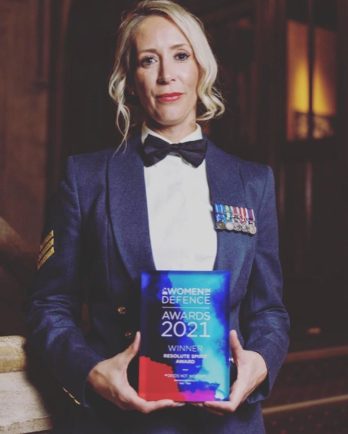
Despite these struggles, Georgie won seven medals at the Warrior Games in 2019, as the UK team captain. She was awarded a commendation in the Queen’s birthday honours list in 2020, and also won the Resolute Spirit Award at the Women in Defence Awards 2021 for her incredible resilience despite her own challenges, and using this to allow others to thrive. She is now a human resources programme lead at Babcock International Group.
She said: “I would encourage ex-servicewomen to get help if they need it because no one should have to carry everything alone. Ex-servicewomen often shoulder a double burden – the expectation to be strong and self-reliant, and the reality of experiences that are rarely understood outside the military.
“Getting support isn’t a sign of weakness, it’s an act of self-respect. It’s a way to reclaim your identity, your well-being, and your future.
“There are several barriers that stand in the way of women getting support, such as visibility – women’s service and their injuries are often overlooked or minimised, which can make them feel they’re ‘not veteran enough’ to ask for help. There’s a stigma as many women feel pressure to be resilient, to cope quietly, or to avoid being judged as ‘struggling’.
“Women are more likely to be primary carers, making it harder to prioritise their own needs. Some have faced prejudice or inconsistency during service, leaving them wary of seeking support from institutions. And there is a lack of representation – when you don’t see people like you accessing help, it’s easy to assume it’s not meant for you.”
At Help for Heroes, 75 per cent of the charity’s employees are women, and out of the total number of staff who have served their country, 53 per cent are female, so are in a position to understand the experiences of former servicewomen.
The charity has also launched a new web page aimed at ex-servicewomen and developed an information leaflet targeting women who have served, which is being distributed to GPs and hospitals nationwide.
Visit www.helpforheroes.org.uk/get-help/ex-service-women/ for more details.