Paper clutter builds up faster than most people realise.
Receipts slip behind the sofa, school letters vanish into coat pockets, and important documents end up buried under magazines or junk mail.
Before long, finding a single form becomes a frustrating hunt through drawers and bags.
The problem isn’t just about tidiness. Misplaced paperwork can mean missed deadlines, lost warranties, or scrambling to replace documents when they’re urgently needed. Many households struggle to keep track of bills, medical records, and official letters without a clear system in place.
Simple habits can make a real difference. Sorting papers as they arrive, setting up a basic filing routine, and knowing what to keep or discard all help reduce the chaos. This article looks at practical ways to manage household paperwork, from creating designated storage spots to using everyday tools that make documents easier to find and share when needed.
Why Important Papers Disappear in UK Homes
Many UK households receive a significant amount of post each year, which can create a challenge for those without a system in place. Council tax bills, NHS appointment letters, TV licence reminders, and school forms all arrive at different times and in no particular order, making it easy for paperwork to get lost in the shuffle.
Many UK homes accumulate paperwork in high-traffic areas near entrances or kitchens where post is first opened. Without a designated space for sorting or storing documents, this daily routine results in paperwork sitting in convenient but unsuitable spots. Over time, these unsorted piles can make it more likely for papers to go missing. Essential letters blend in with junk mail or less important items. A dedicated home filing system can help prevent this issue and make it easier to keep track of important documents.
Time pressure makes things worse. After a long day, sorting through post feels like a low priority. Papers get shuffled aside rather than filed, and the pile grows. Children’s school letters often get mixed in with utility bills. These then sit under a magazine until someone needs them urgently. The outcome is a home where important paperwork exists but cannot be located when needed. This situation occurs due to process gaps, not individual failings. It can be addressed with straightforward changes to household routines and better document storage solutions UK residents can implement easily.
Create a Central Document Station for Organising Important Papers
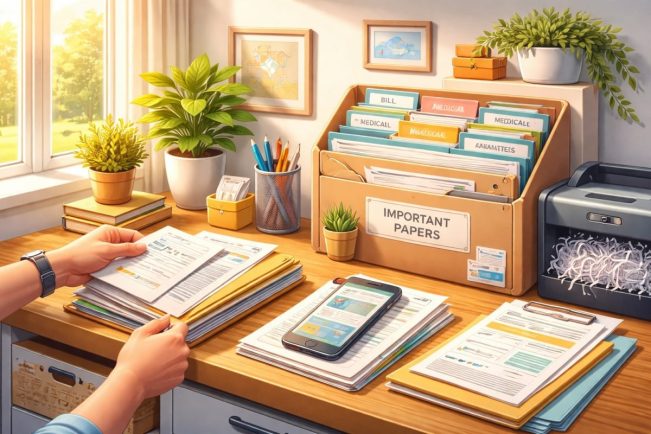
One of the most effective changes any household can make is choosing a single, fixed location for all incoming paperwork. This could be a small filing cabinet, a wall-mounted organiser near the front door, or a dedicated drawer in the kitchen. The location matters less than the consistency of using it.
The physical station should have clearly labelled sections. Useful categories include utilities, medical, financial, warranties, and household admin. A small tray for items needing action within seven days helps separate urgent papers from those that just need filing. Position the station near where post arrives to stop documents from wandering into other rooms.
Essential Supplies for Your Station
Setting up the station doesn’t require much. An accordion folder with twelve or more sections works well for monthly organisation. Clear plastic wallets are useful for documents that get accessed regularly, such as insurance certificates or tenancy agreements. Pre-printed category tabs or a basic label maker keeps everything readable at a glance.
A small recycling bin placed right next to the station helps with the immediate removal of junk mail as each post delivery arrives. Removing unwanted items straight away can help prevent non-essential papers from mixing with important ones. This approach to paper clutter reduction can make weekly sorting tasks more manageable.
Establish a Weekly Paper Review Routine
Regular weekly reviews can make household document management more effective than waiting until a big annual clear-out. This approach helps prevent the build-up of piles and lowers the chance of missing urgent deadlines, such as bill payments or school forms. When new documents are handled each week, any required action is more likely to be spotted while still relevant.
During the review, papers can be sorted into four groups. These are file, action needed, scan and discard, or shred. Items in the action group should either be dealt with immediately or given a specific date for completion. Leaving them in a vague “to do” pile defeats the purpose of the system.
Sensitive documents should be shredded rather than put in the recycling bin. This includes old bank statements, medical letters, and anything with a National Insurance number. Identity theft is a concern. Whole documents in household bins may increase the risk.
Many households now choose to scan important documents before disposing of the originals. Using an app with strong scanning and organisational features, such as the Adobe Acrobat scanner app, turns paper records into searchable digital files. These remain accessible on any device. Scanned files can be stored in secure cloud folders, making retrieval simple months later. Having a digital backup also supports quarterly clear-outs. Older records can be deleted or archived without worrying about losing important information.
What Happens When Document Chaos Takes Over
Searching for misplaced papers can be time-consuming and stressful. Missed payment deadlines may result in late fees, depending on the provider. Keeping paperwork organised can help avoid these unnecessary costs.
Lost medical letters can sometimes delay appointments, especially when referral paperwork is required for follow-up visits. It is generally recommended to keep tax records for several years after the relevant tax year, as gaps in documentation can complicate self-assessment returns or lead to further enquiries.
Insurance claims also become harder to process without accessible policy documents. Many households discover this only when they need to make a claim. This is the worst possible time to start searching. Keeping a scanned copy of each policy in a clearly labelled digital folder can help avoid this risk.
Stress around misplaced paperwork is common, yet straightforward steps solve it. Set up one spot at home for all post and official forms as soon as they arrive. Sort these weekly so nothing goes unnoticed. Scan key items using the Adobe Acrobat scanner app before discarding the originals. These habits allow every family member to find their documents fast and keep paperwork under control throughout the year.