
Every time you flick that wiper switch during a downpour, a remarkable piece of engineering springs into action.
The windshield wiper motor is the powerhouse that transforms electrical energy from your car’s battery into the precise mechanical motion that keeps your windscreen clear.
Modern wiper motors are far more sophisticated than you might think. They don’t just spin in circles like a fan. Instead, they create a controlled back-and-forth sweeping motion that covers the maximum windscreen area while maintaining consistent pressure and speed.
Did you know? A typical wiper motor can operate for over 1.5 million cycles before showing signs of wear – that’s roughly equivalent to 10 years of regular use in British weather conditions.
Converting electricity into motion

The Electrical Foundation
The process begins when you activate the wiper switch. This sends a 12-volt signal to the wiper motor, which houses a compact but powerful electric motor. This motor typically draws between 3-5 amps during normal operation, though it can spike to 8-10 amps when starting up or working against heavy resistance like thick snow or ice.
Gear Reduction System
The electric motor itself spins at roughly 3,000 RPM – far too fast for effective windscreen cleaning. The motor connects to a gear reduction system that slows this rotation down to a more manageable 40-60 RPM for the wiper arms. This gear system also multiplies the motor’s torque, giving the wipers enough power to push through debris and water.
The Crank and Linkage System
Here’s where the real engineering magic happens. The reduced-speed rotation from the gear system needs to become the sweeping motion of your wiper blades. This transformation occurs through a crank and linkage mechanism that’s surprisingly similar to how a steam locomotive’s wheels work.
- Crank Mechanism
The motor drives a crank arm that rotates in a complete circle. Attached to this crank is a connecting rod that translates the circular motion into linear movement. As the crank rotates, the connecting rod pushes and pulls the wiper linkage back and forth.
- Linkage System
The linkage system consists of metal arms and joints that distribute the motion from the motor to both wiper arms simultaneously. Most cars use a parallel linkage system that ensures both wipers move in sync, though some vehicles employ a single-arm system where one wiper covers most of the windscreen.
Windshield Wiper Motor Components and Operation
Complete System Breakdown

Types of wiper motors and mechanisms
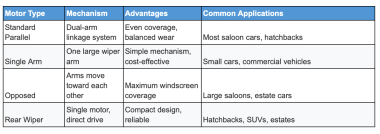
- Permanent Magnet Motors
Most common type using permanent magnets for consistent performance. Reliable and cost-effective for standard applications.
- Series Wound Motors
Higher torque motors used in heavy-duty applications. Better performance in extreme weather conditions.
- Brushless Motors
Modern, efficient motors with longer lifespan. Found in premium vehicles with advanced wiper systems.
Speed Control and Intelligence
Multi-Speed Operation
Modern wiper motors don’t just run at one speed. They typically offer several operating modes: intermittent, slow, fast, and sometimes a high-speed setting for heavy rain. This speed control is achieved through different voltage levels or electronic control modules that adjust the motor’s operation.
Park Position System
One of the most important features of a wiper motor is its ability to return to the “park” position when switched off. This ensures the wiper blades always rest at the bottom of the windscreen, out of the driver’s line of sight. The system uses a cam switch that detects when the wipers reach the correct position and cuts power to the motor.
Electronic Control
Advanced wiper systems include electronic control units that can adjust wiper speed based on rainfall intensity, vehicle speed, and even windscreen washer activation. These systems use sensors to detect water on the windscreen and automatically adjust wiper operation accordingly.
Expert Insight: When replacing wiper blades from autodoc.co.uk always check that your wiper motor is functioning properly. A worn motor can cause premature blade wear and reduce wiping effectiveness.
Common Issues and Maintenance
- Motor Wear Symptoms – Wiper motors are generally reliable, but they do wear out over time. Common symptoms include slow or jerky movement, failure to return to park position, or complete motor failure. These issues often develop gradually, giving you time to address them before complete failure.
- Maintenance Tips – Regular maintenance can significantly extend your wiper motor’s life. Keep the windscreen clean to reduce motor strain, replace worn wiper blades promptly, and never operate wipers on a dry windscreen. During winter, clear ice and snow from the windscreen before using wipers to prevent motor overload. Tips about windscreen wipers from AUTODOC: Regular inspection of your wiper system components can prevent costly motor replacements. Check linkages, arms, and blades every few months for signs of wear or damage.
- Troubleshooting Guide – If your wipers stop working, start by checking the fuse and electrical connections. A blown fuse is often the culprit and is easily replaced. If the motor runs but wipers don’t move, the problem likely lies in the linkage system. Grinding noises usually indicate worn gears within the motor assembly.
Future Developments
Wiper technology continues to evolve with advances in automotive engineering. Modern developments include heated wiper blades, adaptive wiping patterns that adjust to windscreen shape, and integration with advanced driver assistance systems.
Some manufacturers are experimenting with ultrasonic windscreen cleaning systems that could eventually replace traditional wipers altogether. However, the proven reliability and effectiveness of mechanical wiper systems means they’ll likely remain the standard for many years to come.
The fundamental principle of converting electrical energy to mechanical motion through motors, gears, and linkages has proven so effective that it’s remained largely unchanged for decades. This testament to solid engineering means that understanding how your wiper motor works gives you insight into one of the most reliable systems in your vehicle.
Conclusion
Your windshield wiper motor represents a perfect example of mechanical engineering solving a real-world problem. By converting simple electrical energy into precisely controlled mechanical motion, it provides the visibility you need to drive safely in all weather conditions.
Understanding how this system works helps you appreciate the engineering that goes into every component of your vehicle. It also enables you to recognise potential problems early and maintain your wiper system effectively, ensuring it continues to keep your windscreen clear for years to come.
Next time you’re caught in a downpour and your wipers spring into action, you’ll know exactly what’s happening under the bonnet – from the initial electrical signal to the final sweep across your windscreen.
By Alena Kirsanova